Sustainability governance
Latvenergo’s sustainability governance is based on the UN Sustainable Development Goals, clear ESG indicators and internationally recognised assessments, ensuring responsible growth, transparent governance and long-term value for society.
UN Sustainable Development Goals
The UN resolution "Transforming our world: the 2030 Agenda for Sustainable Development", or Agenda 2030, sets 17 Sustainable Development Goals to be achieved to make global development sustainable. In its operations, the Group implements and strives for processes, products and services that contribute to the achievement of UN Sustainable Development Goals 3 to 16.










Sustainability statement
To provide stakeholders with a balanced and adequate perception of the company’s environmental, social and governance performance and its investment in sustainable development, Latvenergo Group prepares its Sustainability Statement annually in accordance with EU sustainability reporting requirements.
From 2009 to 2023, sustainability reports were prepared in accordance with the GRI (Global Reporting Initiative) Standards guidelines.
Sustainability assessments
S&P Global corporate sustainability assessment
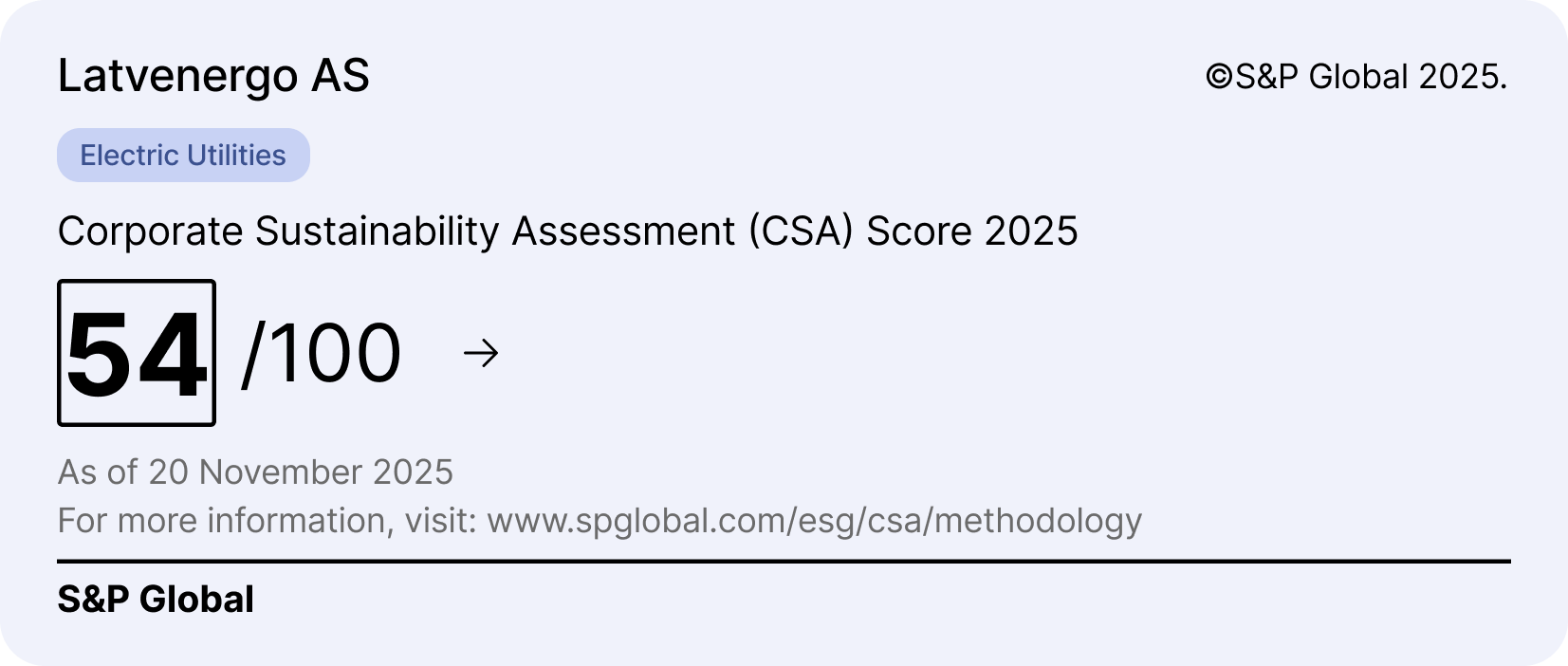
In November 2025, Latvenergo AS received the Standard & Poor's Global corporate sustainability assessment, scoring 54 points. This places Latvenergo AS among the top 30% of companies in the electricity industry worldwide. More than 200 companies in total have been assessed in this industry. S&P Global positively assessed Latvenergo AS initiatives in all ESG areas, including climate strategy, human capital management, transparency and sustainability disclosure, risk management and business ethics.
ISS ESG assessment
In May 2023, the sustainability rating agency ISS ESG awarded Latvenergo AS an ESG corporate rating of B-, which places Latvenergo AS among the top 10% of companies in the industry. In addition, a Prime badge was awarded, which is given to companies that meet ISS ESG’s stringent requirements for sustainability performance in the industry.
Moody's climate targets assessment
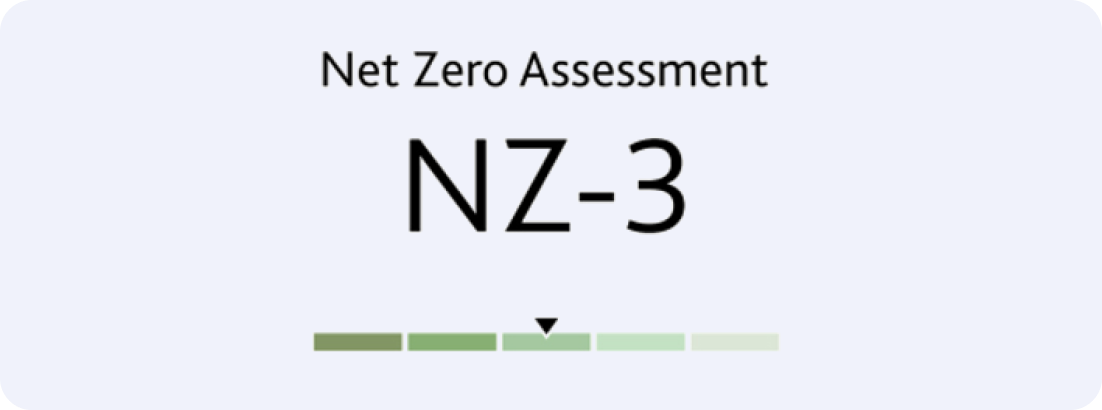
Latvenergo is the first company in the Baltic states to publish Moody’s opinion on the climate targets defined by the company and the feasibility of achieving them. The NZ-3 score received by the Group confirms the high credibility of reaching the climate targets of the Group and its compliance with the requirements of the Paris Agreement.

Sustainability Committee
In order to improve sustainability governance and promote the implementation of sustainability initiatives in the Latvenergo Group, a Sustainability Committee has been established.
Latvenergo Sustainability Committee RegulationsDocuments
Latvenergo Group not only complies with statutory requirements, but also undertakes voluntary responsibility for its impact on society, the environment and the national economy, thus contributing to sustainable development of the Group. The objective of the Sustainability Policy of Latvenergo Group is to define and maintain common principles for the sustainable development of the Group.
The Management Board of Latvenergo AS approved the Sustainability Strategy of the Group at the end of 2023. It complements the medium-term operational strategy with a broad plan of specific actions covering environmental, social and governance issues.